
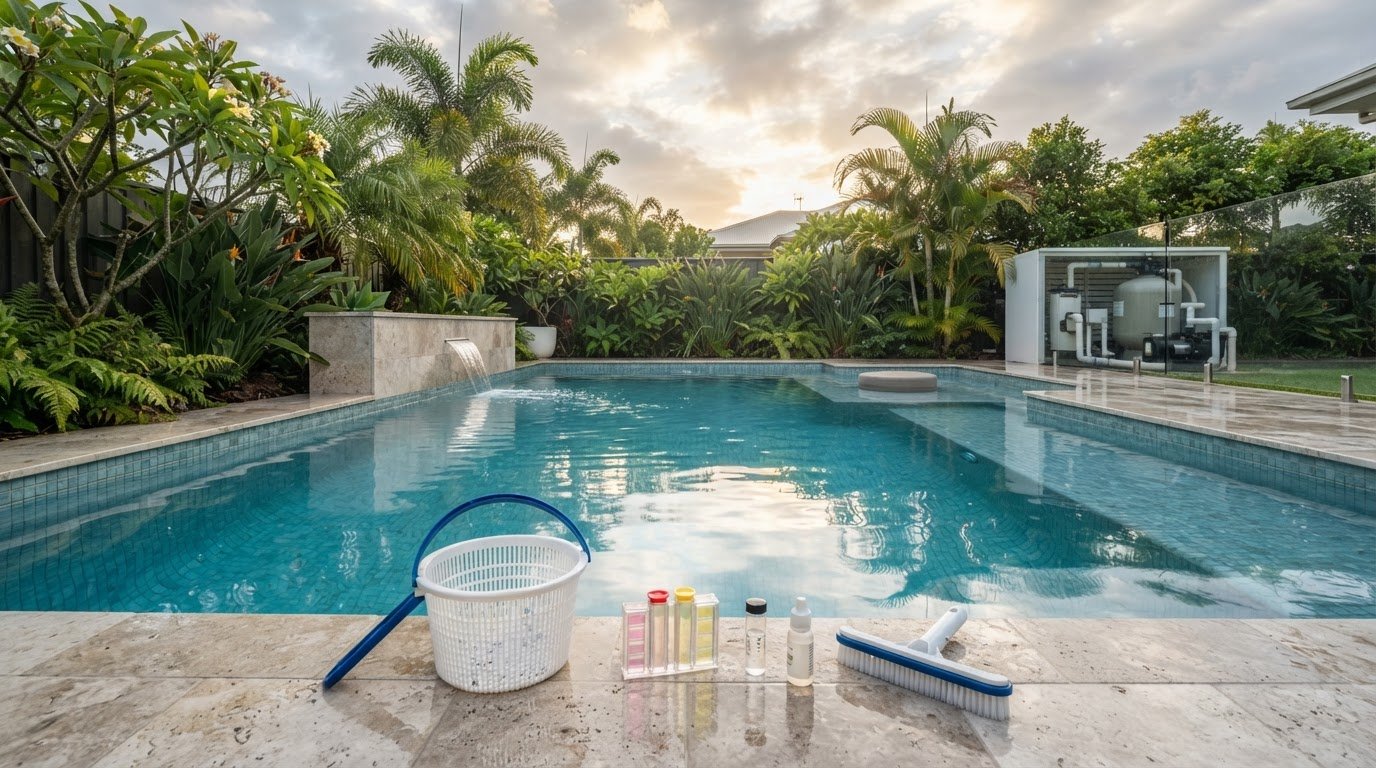
A green pool isn’t always solved by adding more chlorine. Clear green or teal water with a high chlorine reading should be tested for metals before it’s treated as algae. To prevent algae in a pool in Brisbane’s weather, keep pH between 7.2 and 7.6, test chlorine and pH once a week year-round and 2-3 times a week in summer, and run the pump for 8-12 hours daily during a South East Queensland summer.
Brisbane’s warmth and rainfall can make pool care unpredictable. To prevent algae in pool Brisbane weather, focus on regular water testing, balanced chemistry and steady circulation. Balanced water supports effective sanitising, while circulation moves water through the filter and limits stagnant areas.
This guide explains how to test and balance pool water, adapt your routine to Brisbane weather, recognise signs that may not be algae, and keep filtration working effectively. You’ll also learn what to do after heavy rain and when persistent or widespread growth needs more than routine maintenance.
Key Takeaways
- Keep pool pH between 7.2 and 7.6, and test chlorine and pH weekly year-round, increasing checks to 2-3 times a week in summer.
- After heavy rain, clear debris, retest the water and adjust its balance because rainfall can dilute chemicals and affect pH and chlorine.
- Green or teal water isn’t always algae; consider the water’s appearance and chlorine reading before deciding how to treat it.
- Run the pump for 8-12 hours daily during a South East Queensland summer to circulate and filter water consistently.
- Brush pool surfaces and keep filters, skimmers and equipment clear to reduce stagnant spots and help your water-care routine work effectively.
Testing and balancing pool water chemistry
Test pH and chlorine regularly, then adjust them using pool chemical instructions; keep pH between 7.2 and 7.6. Don’t swim in visibly algae-affected water or during treatment, and wait until the product instructions say swimming can resume.
Test the pool water
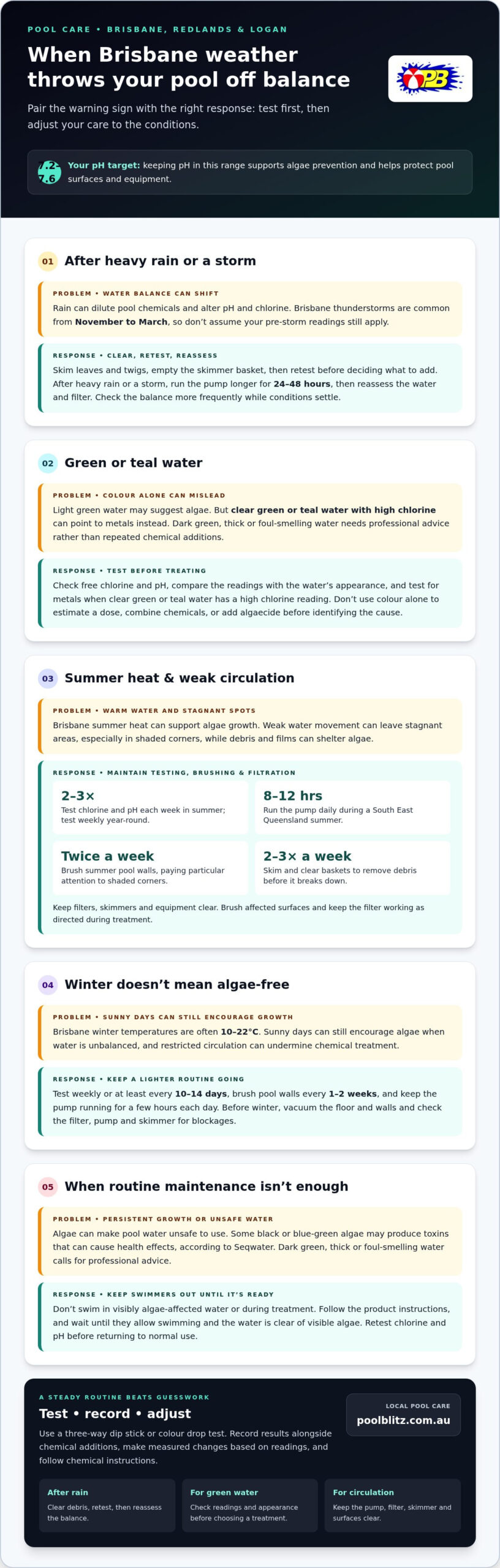
Test chlorine and pH once per week throughout the year, increasing checks to 2-3 times per week during Brisbane summer, December to February. After heavy rain, test again because rainfall can dilute chemicals and alter both readings. Use a three-way dip stick or colour drop test, and record results alongside chemical additions. A record helps you spot changes and avoid over-correcting the water.
Adjust chemistry and sanitiser levels
Adjust pH, alkalinity and chlorine according to your test results, making measured changes rather than adding chemicals by guesswork. Keep pH between 7.2 and 7.6 to help prevent algae and protect pool surfaces and equipment. Free chlorine below about 1 ppm can allow algae spores to multiply; saltwater pools need monitoring too, because low chlorine can still leave algae able to grow.
- Track changes after rain. Skim leaves and debris, check the skimmer basket, then retest the water before deciding what to add. Rain can dilute pool chemicals, so use the new readings rather than assuming your usual dose still suits the water. After a heavy storm, clean the pool and check its balance more frequently while conditions settle.
- Match your response to the water’s appearance. Light green water may indicate algae, but clear green or teal water with high chlorine can point to metals instead. Test before treating, since adding algaecide to the wrong problem won’t correct the cause. Dark green, thick or foul-smelling water calls for professional advice rather than repeated chemical additions.
- Use colour as a prompt, not a chemical dose guide. A dark green pool where the bottom isn’t visible requires a different assessment from a light green pool. Check the water and follow the treatment product’s instructions; don’t combine chemicals or estimate a dose from colour alone. Brush affected surfaces and keep the filter working as directed during treatment.
- Check before swimming again. Algae can make pool water unsafe to use, and some black or blue-green algae may produce toxins that can cause health effects, according to Seqwater. After treatment, keep swimmers out until the product instructions allow re-entry and the water is clear of visible algae. Retest chlorine and pH before returning to normal use.
Pool maintenance considerations for Redlands, Logan and Brisbane South
For Redlands, Logan and Brisbane South, adjust pool care to rainfall, temperature and debris rather than following a summer routine unchanged. Water-use restrictions can affect tasks such as topping up or backwashing, so follow the current rules for your address and use water carefully.
-
Adapt maintenance after storms
After a storm, clear leaves and twigs, empty the skimmer basket and check pool water chemistry. Brisbane thunderstorms are common from November to March, and rainfall can dilute chemicals. Run the pump longer for 24-48 hours after heavy rain or a storm, then reassess the water and filter. Don’t rely on the pre-storm chemical balance.
-
Set a seasonal maintenance routine
Adjust checks as the season changes, but don’t treat winter as an algae-free period. Brisbane winter temperatures are often 10-22°C, and sunny days can still encourage growth when water is unbalanced. Test weekly or at least every 10-14 days in winter, and brush pool walls every 1-2 weeks. Keep the pump running for a few hours each day.
-
Follow a weekly pool routine
Set a regular time each week to skim the surface, check the skimmer basket and inspect the pool’s condition. In Redlands, Logan and Brisbane South, skimming and clearing baskets 2-3 times per week helps remove debris before it breaks down. Each session takes about 5-10 minutes; a full weekly routine is estimated at 20-40 minutes.
- In summer, brush the walls twice a week, paying particular attention to shaded corners where water movement may be weaker. During warm, humid weeks, keep up this routine. Regular brushing and cleaning remove debris and films that can shelter algae, while checks help you spot changes before they spread.
- Before winter, vacuum the pool floor and walls to remove scum and settled debris. Check the filter, pump and skimmer for blockages, as restricted circulation can undermine chemical treatment. Keep equipment in good condition and clear the pump lint pot to help water move through the system.
- When seasonal changes make pool water harder to manage, pool water balancing support can help guide adjustments. Use the test results, recent rainfall and equipment condition to decide what needs attention, rather than adding chemicals or changing pump settings without a clear reason.
Can high chlorine cause a green pool?
High chlorine doesn’t automatically mean algae caused green water. Brisbane’s summer heat, with pool water reaching the high 20s to low 30s °C, can support algae growth, while storms may dilute chlorine and alter pH.
- Retest before treating green water. Check free chlorine and pH, then compare the results with the water’s appearance. Clear green or teal water with high chlorine can indicate metals, so test for metals before treating the colour as algae. Adding more chlorine without identifying the cause may not clear it.
- Keep chlorine and stabiliser in balance. Aim to keep free chlorine at 1-3 ppm, towards the upper end during summer heat, and cyanuric acid stabiliser at 30-50 ppm. Free chlorine below about 1 ppm can leave algae spores able to multiply. A saltwater pool still needs adequate chlorine, even though its chlorinator generates chlorine from salt.
- Retest after storms and runoff. Brisbane storms can wash leaves and other debris into the pool, while rainfall may dilute chemicals and change pH and chlorine levels. Skim debris, test the water after heavy rain and adjust maintenance to the new readings. If a storm is forecast, check chlorine the next morning rather than relying on the pre-storm result.
- Use shock treatment only when the water test and algae indicate it’s needed. For a traditional chlorine pool with algae, treatment instructions recommend raising chlorine to 10-15 ppm with a shock treatment. Run the filter for at least 24 hours afterwards, and follow the product directions. Don’t treat clear green water as algae without checking for metals first.
- Maintain sanitiser levels as conditions change. Even a one-day drop in chlorine can trigger an algae outbreak, so test regularly and respond to heat, rain and pool use. Brisbane’s warm conditions can favour algae; once a bloom starts multiplying, it can double in a day. Consistent chlorine levels and circulation help limit rapid spread.
- Recheck the water before returning to normal use. After shock treatment, keep the filter running for the required period and retest the pool. Follow the product instructions about swimming and treatment rather than judging readiness by water colour alone. A clear-looking pool still needs suitable sanitiser and pH levels.
Identifying green, mustard and black algae
Prevent and treat green algae by balancing the water, brushing pool surfaces and maintaining circulation. If algae appears, identify its type, remove debris and choose a treatment suited to the infestation instead of adding chemicals blindly.
- Check the water and surfaces before choosing a treatment. Green algae can cloud the water or coat pool walls and floors, especially in warm summer conditions. Leaves and other debris can add material that supports growth. Clear debris, inspect shaded surfaces and test the water before deciding how to respond.
- Brush and filter a green pool during recovery. Brush affected areas to loosen algae, then vacuum settled material to waste if your pool setup allows. Treat the water according to the test results and product directions. Run the pump continuously while the water clears, and clean or check the filter as it collects loosened algae.
- Look for mustard algae that clings to surfaces. Yellowish patches can look like dust or dirt, but brushing helps show whether the material is attached to the pool. Mustard algae may need extra scrubbing and an algaecide, and clearing it can take a day or two. Clean equipment and toys that have contacted affected areas so they don’t carry organic matter back into the water.
- Treat black algae as a persistent surface problem. Dark spots can be difficult to remove because colonies may be stubborn and return after surface cleaning. Scrub affected areas firmly, then use a treatment intended for the algae and pool type. Clearing black algae can take the better part of a week, with repeat treatment and close monitoring for regrowth.
- Keep swimmers out of visibly affected water. Some black or blue-green algae may produce toxins that can cause health effects, according to Seqwater. Don’t assume clear-looking water is ready for swimming immediately after treatment. Follow the chemical label’s directions and make sure the water has cleared.
- Check treated spots for a week. After treating black algae, watch affected areas for regrowth for a week. For any algae type, remove leaves, brush surfaces and maintain filtration. If growth spreads widely or persists after treatment, seek professional help rather than repeating chemical doses without reassessing the water.
Pool circulation and filtration times
Circulation helps prevent stagnant areas where algae can establish, while filtration removes suspended debris. In a South East Queensland summer, many pools need 8-12 hours of pump operation daily. To prevent algae in a pool in Brisbane weather, match pump runtime to the season, pool conditions and equipment performance.
- Run the pump long enough to circulate the pool. Aim to circulate the full pool volume at least once daily. In a South East Queensland summer, filtration usually takes 8-12 hours, although the pool and equipment affect the required runtime. Short cycles may leave poorly circulated areas where chemicals don’t spread evenly, making it harder to prevent algae in a pool during Brisbane weather.
- Adjust runtime to the season and conditions. Summer heat, swimming and debris increase demands on circulation and the filter. In Brisbane winter, pumps can often run for 4-6 hours daily, depending on the pool. Sunny winter days can still encourage algae growth if water balance slips, so don’t stop filtration simply because swimming becomes less frequent.
- Extend filtration after heavy rain. Run the pump longer for 24-48 hours after heavy rain or a storm. Extra circulation helps move rainwater and contaminants through the filter. Skim leaves and twigs promptly, then check the skimmer basket and pump lint pot so debris doesn’t obstruct water flow.
- Check the return flow and pool surface. Confirm that water returns steadily through the outlets, and look for corners or shaded areas with weak movement. Circulation distributes chemicals through the pool, but a blocked basket or dirty filter can reduce flow. Clear debris and inspect the equipment if the flow seems weaker than usual.
- Clean the filter on a regular schedule. Clean the filter regularly, following the maintenance guidance for its type. Follow the cleaning method for the filter type, and monitor pressure or flow for signs of restriction between cleans. A dirty filter can limit circulation, leaving the pump running without effectively moving and cleaning the water.
- Use a pool cover when practical. A cover limits leaves and other debris entering the water and reduces sunlight reaching it. Remove debris from the cover before opening the pool so it doesn’t fall into the water. Continue skimming the surface and checking the filter as part of your regular routine.
- Match equipment to the pool’s filtration needs. Pool size, filter condition and circulation patterns all influence how effectively water moves. If flow remains poor after clearing baskets and cleaning the filter, review the filtration system and pump. For help with pool filtration systems, explore options suited to maintaining steady circulation.
Pool Blitz: Regular Pool Servicing
Pool Blitz provides regular pool servicing to help maintain pool water and equipment through Brisbane’s changing weather. Regular care can help identify shifting water balance, debris build-up or filtration issues before they contribute to algae growth.
For help between regular visits, Pool Blitz also provides casual pool servicing. Pool chemicals, pool equipment repairs, and robotic pool cleaners and repairs support different parts of a practical care routine. These services can help when testing and cleaning aren’t enough to resolve a recurring issue, or equipment needs attention.
For support with ongoing pool care or a specific maintenance concern, contact Pool Blitz or visit poolblitz.com.au.
Make pool care part of your routine
A clear pool is easier to maintain when care fits the way you use it. Choose a routine you can follow through Brisbane’s changing seasons, and respond to visible changes before they become harder to manage. To prevent algae as Brisbane weather shifts, review which tasks you can handle consistently and where extra support would help.
Pool Blitz provides regular pool servicing for ongoing care, casual pool servicing for specific maintenance tasks, and robotic pool cleaners and repairs for equipment support. These services can complement your testing and cleaning at home and help make your maintenance plan manageable.
Choose the approach that suits your pool and household, then take the next step with confidence. Contact Pool Blitz about pool care and find a routine that works for your pool.
Frequently Asked Questions
Does shock kill algae?
Yes, a chlorine shock can kill algae when the treatment suits the pool and is applied as directed. It’s not a stand-alone fix: brush affected surfaces to loosen growth, then keep water circulating so the filter can capture suspended material. For a traditional chlorine pool with algae, treatment guidance recommends raising chlorine to 10-15 ppm and running the filter for at least 24 hours. Follow the product label before swimming.
What’s the fastest way to clear a green pool?
For a straightforward green algae bloom, shock treatment, brushing and continuous filtration can clear the water in 12 to 24 hours. Remove leaves and other debris first, brush the walls and floor, and vacuum settled material to waste if your setup allows. Clarifier or flocculant may be needed to collect fine particles. If the pool is dark green and you can’t see the bottom, avoid swimming and seek professional help.
Why do pools turn green?
Most green pools have algae growing because sanitiser levels or circulation haven’t kept growth in check. Heat, rain, debris and poor filtration can contribute by changing water conditions or bringing organic material into the pool. Green water isn’t always algae: clear green or teal water with high chlorine can indicate metals. Test the water and assess its appearance before choosing a treatment.
Why does my pool keep going green?
Repeated green water often means the cause remains unresolved, even if an earlier treatment cleared the visible algae. Check whether chlorine falls between tests, the filter is restricted, or water is failing to circulate through all areas. Also inspect a saltwater pool’s salt cell, as build-up can reduce chlorine production. Persistent growth may point to faulty circulation equipment or another hidden issue that needs diagnosis.
What pool water temperature and conditions encourage algae growth in Brisbane?
Algae can grow readily in warm Brisbane pools. During South East Queensland summer, water regularly reaches the high 20s to low 30s °C, and water above 26°C is in the algae growth zone for much of the year. Sunlight, leaves, rain dilution and weak circulation can compound the risk. Keep watch through warm, humid weather, even when the pool looks clear.
What chlorine level should a Brisbane pool maintain to prevent algae?
A useful target for free chlorine is 1-3 ppm, aiming towards the upper end during summer heat. Below about 1 ppm, algae spores may multiply. Check stabiliser as well, since cyanuric acid helps protect chlorine and should be kept at 30-50 ppm. Test readings matter more than adding a routine dose: adjust according to the pool’s actual results and the chemical label.
How often should pool owners in Brisbane test and balance pool water?
Test chlorine and pH once a week year-round, then increase testing to 2-3 times a week during summer, from December to February. In winter, test weekly or at least every 10-14 days. Add an extra test after heavy rain, high pool use or a noticeable change in water clarity. Record each result and chemical addition to help spot patterns and avoid over-adjusting.
How often should Brisbane pools be brushed, vacuumed and filtered to prevent algae?
Brush pool walls twice a week in summer, focusing on shaded corners, and every 1-2 weeks in winter. Skim debris and check baskets regularly; vacuum when leaves, dirt or settled material collect on the floor. In a South East Queensland summer, pump and filter operation commonly takes 8-12 hours daily. Clean the filter every 3 months, and extend pump runtime after heavy rain.
No responses yet