
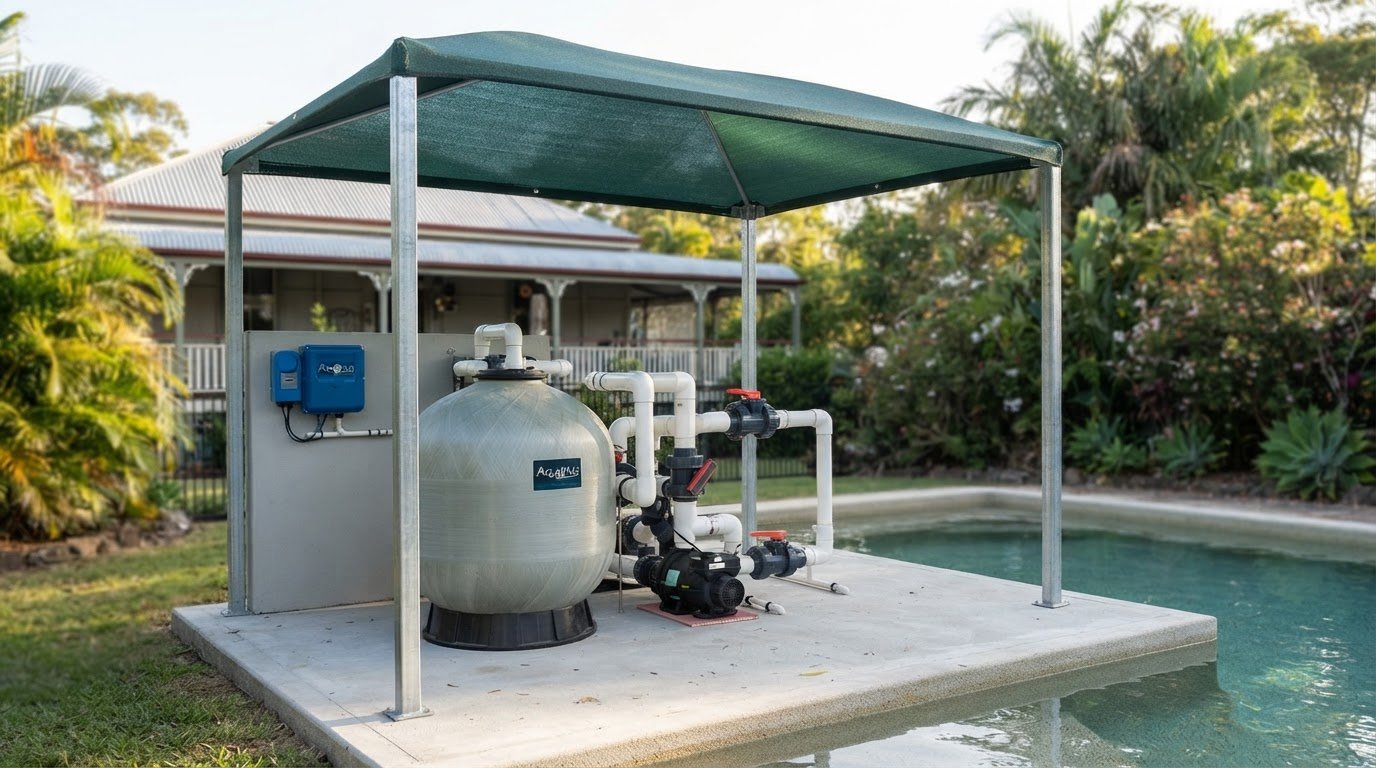
Australia’s UV index can reach 11 or higher from November through March, putting exposed pool equipment under sustained sun stress. Knowing how to protect pool equipment from sun damage starts with shading pumps and filters while keeping air moving around them, then storing cleaners and removable accessories out of direct sunlight when they’re not in use.
It’s easy to focus on water quality and overlook the equipment that keeps a pool running. In Brisbane, strong sun and heat can gradually fade, weaken or crack exposed materials. Excess heat can also affect how motors and filters operate.
This guide explains how sun exposure affects pool equipment, which signs of damage to look for, and practical ways to protect robotic cleaners and removable accessories. You’ll also learn why shade needs to allow ventilation and how regular inspections can help you spot wear early.
Key Takeaways
- Use shade that protects equipment from direct sun while allowing airflow around motors and filters.
- Look for fading, cracks, warping and unusual motor noises as possible signs of heat or sun-related wear.
- Store robotic cleaners and removable accessories out of direct sunlight when they’re not in use.
- Pay close attention to exposed plastic parts, seals and equipment covers, as their materials can deteriorate with ongoing UV exposure.
How ultraviolet radiation damages pool equipment materials
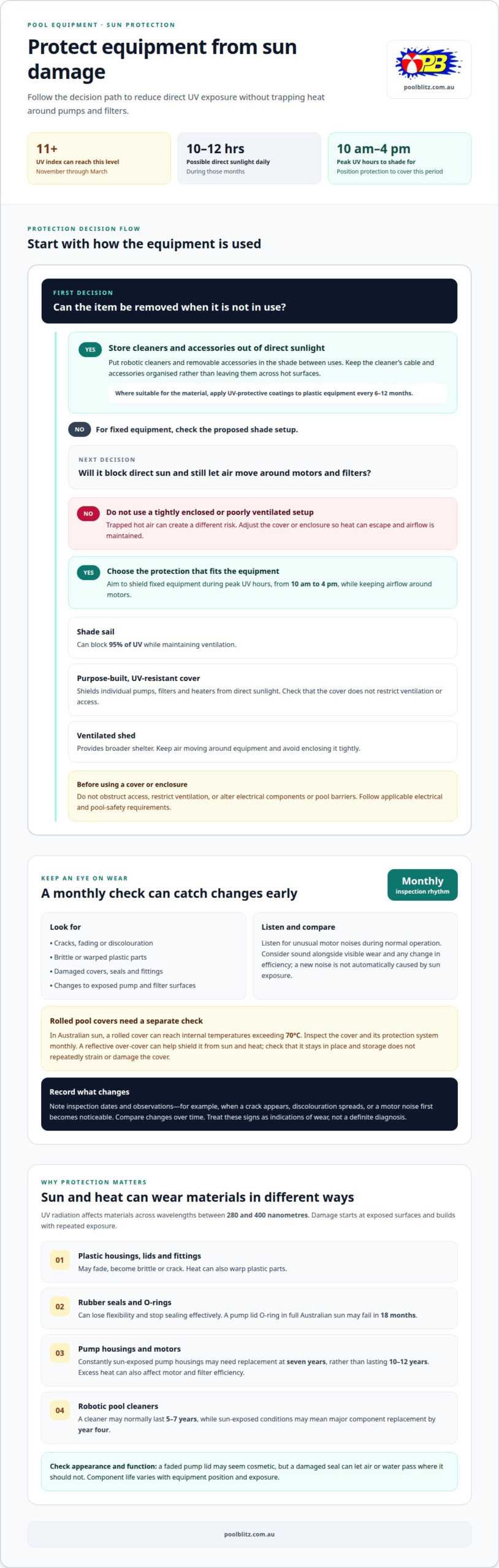
Brisbane pools can face UV index levels of 11+ from November through March. Direct sunlight may last 10-12 hours daily during those months. UV radiation affects materials across wavelengths between 280 and 400 nanometres. Damage starts at exposed surfaces and builds with repeated sun exposure. For pool owners, how to protect pool equipment from sun damage starts with understanding which materials are exposed.
Plastic housings, lids and fittings can fade, become brittle or crack as ultraviolet exposure breaks down their surfaces. Heat adds further stress: plastic parts may warp, while rubber seals can lose flexibility and stop sealing effectively. A faded pump lid may seem like a cosmetic issue, but a damaged seal can let air or water pass where it shouldn’t. Check both the material and how it functions, not just its appearance.
Small components can be especially vulnerable. A pump lid O-ring exposed to full Australian sun may fail in 18 months. Pool pump housings exposed to constant sun may need replacement at seven years rather than lasting 10-12 years. These examples show how direct exposure can shorten component life, although damage depends on the equipment’s position and exposure. A shaded pump can experience less direct UV than one exposed throughout the day, while trapped heat inside an enclosure creates a different risk.
In Brisbane, a cover or enclosure should not obstruct access, restrict ventilation or require altering electrical components or pool barriers. Follow all applicable electrical and pool-safety requirements.
Shade works best when it blocks direct sun without trapping hot air. Position a pergola, awning or shade sail to shield equipment during peak UV hours, from 10 am to 4 pm. UV-resistant covers designed for pumps, filters and heaters offer another way to reduce direct exposure. Keep airflow around motors, and avoid enclosing equipment tightly. Knowing how to protect pool equipment from sun damage means reducing sun exposure while allowing heat to escape, not creating a hot, sealed space around equipment.
Inspecting equipment for heat and sun damage
A monthly inspection can help reveal changes before equipment performance suffers. Check exposed pump and filter surfaces, covers and their protection systems for cracks, discolouration or warping. Pay particular attention to plastic lids and fittings that receive direct afternoon sun. Surface changes can indicate material wear, while a split or distorted part may stop components fitting together properly.
Listen to the motor during normal operation. Unusual noises can signal a change that needs attention, especially if the pump also seems less efficient. Excessive heat can reduce the efficiency of pool motors and filters, so compare current operation with what’s normal for the equipment. Don’t assume a new sound is caused by sun exposure alone; consider it alongside visible wear.
Rolled pool covers need their own check. Left in Australian sun, they can reach internal temperatures exceeding 70°C. Inspect the cover and its protection system monthly, looking for brittle or damaged material and signs of heat exposure. A reflective over-cover can help shield a rolled cover from sun and heat. Check that it remains in place and that the cover can be stored without repeated strain or damage.
Keep a simple record of inspection dates and changes. For example, note whether a crack has appeared, whether discolouration has spread, or when a motor noise first became noticeable. Comparing those observations over time makes gradual deterioration easier to recognise. If a damaged component or persistent unusual noise needs professional attention, pool equipment repairs can help address the issue before it disrupts normal operation. Regular observations also help distinguish a developing problem from the usual appearance and sound of equipment.
Use the inspection to consider the equipment as a whole: cracks, discoloration and unusual motor noises are observable signs to watch for, not details to overlook. These can indicate wear caused by heat or sun exposure. Keeping the focus on those visible and audible clues makes the check purposeful, without treating any one sign as a definite diagnosis. If these signs are present, their relevance is as indications of wear associated with heat or sun exposure.
Protecting pool cleaners and removable accessories
Keep robotic cleaners and removable accessories in the shade when they’re not in use. Store them out of direct sunlight, and protect fixed equipment without trapping heat.
Cover and Shed Materials
UV-resistant materials slow sun exposure on equipment covers and storage sheds. Purpose-built covers for pumps, filters and heaters shield them from direct sunlight and reduce heat exposure.
For a pump cover box, UV-stabilised plastic or powder-coated metal are options. Choose a cover suited to the equipment and inspect it regularly: fading or brittleness can reduce its protective value over time.
Shade and Enclosure Options
Shade cloth, a purpose-built cover and a ventilated shed protect equipment in different ways. A shade sail over pool equipment can block 95% of UV while maintaining ventilation; a fitted cover shields individual units, while a shed provides broader shelter.
For a pump and filter, position shade to cover them during peak UV hours, from 10 am to 4 pm. Whichever option you use, keep airflow around motors so heat can escape. A tightly enclosed space can trap heat rather than reduce it.
Australian heat also affects removable cleaners. A robotic pool cleaner may normally last 5-7 years, but sun-exposed conditions may mean major component replacement by year four. Store it out of direct sun between uses, and apply UV-protective coatings to plastic equipment every 6-12 months, where suitable for the material.
Before storms or bushfire conditions, secure loose covers and move removable accessories to sheltered storage where practical. Keep the cleaner’s cable and accessories organised instead of leaving them across hot surfaces. These simple steps reduce direct exposure and keep equipment together for its next use.
Clean pool filters regularly because dust can accumulate in Arizona’s dry climate. Remove pool covers when their surface temperature exceeds 38°C, and when ambient temperatures exceed 38°C during Australian summer.
What types of pool equipment are most vulnerable to sun and UV damage?
Check exposed plastics, rubber components, pool covers and removable cleaners regularly. Plastic can fade or become brittle, while rubber may lose flexibility. A pump or filter cover can shield the unit, but the cover itself needs inspection too. Sun exposure, heat and airflow all influence which materials wear first.
Pool blankets and their rollers face direct exposure when left uncovered. UV-stabilised pool blankets typically last 3-4 Australian summers. A damaged pool cover can lose 40-60% of its protective benefits, so inspect the material for deterioration rather than judging it by appearance alone. Reflective over-covers can shield rolled covers from sun and heat while they’re stored.
Vinyl liners are another UV-sensitive pool material, even though they’re not equipment. In Australia, they typically need replacement every 7-10 years, compared with 10-15 years in cooler climates. This difference highlights why sun protection matters across the pool area, not just around the pump. A pool cover can reduce UV exposure to the liner, as well as evaporation and debris entering the water.
Pool chemicals also need sensible storage. Free chlorine in direct Australian sunlight has a half-life of about 45 minutes, so sunlight affects pool water chemistry as well as physical materials. Keep chemical containers stored according to their product labels, away from direct sun. For equipment, prioritise exposed plastic surfaces and removable parts that sit outdoors between uses. A robotic cleaner stored in direct sun may have vulnerable plastic components and cables; put it in shaded storage after use.
Protecting different materials calls for more than one approach: shade fixed equipment, cover rolled blankets, and store removable items out of direct sun. If UV or heat has damaged a component, arrange pool equipment repairs to address the fault.
Pool Blitz: Pool Equipment Repairs
Pool Blitz provides pool equipment repairs when sun or heat damage affects a pump, filter or other pool component. Cracked housings, damaged seals, reduced performance or persistent unusual motor noise can warrant a closer assessment. Pool Blitz also sells and repairs robotic pool cleaners.
Regular pool servicing helps keep equipment and water care on track, while casual servicing suits pools that need occasional attention. The next step depends on the signs of wear: a visible crack, a leaking seal or a cleaner that no longer works as expected. Pool Blitz provides pool equipment repairs and servicing for these concerns.
To discuss a pool equipment issue, contact Pool Blitz.
Make sun protection part of your pool routine
Build equipment care into your regular pool routine. As the seasons change, note which areas receive the strongest sunlight and whether stored accessories remain protected. If equipment shows wear, record what has changed and when you noticed it. These observations can help guide your maintenance decisions.
Knowing how to protect pool equipment from sun damage means making protection consistent, not treating it as a one-off task. Suitable shade, thoughtful storage and regular inspections can help you respond as conditions and equipment needs change.
If you’d like advice about a pool equipment concern or ongoing care, contact Pool Blitz. Pool Blitz offers regular pool servicing, robotic pool cleaners and repairs, and casual pool servicing. Get in touch to discuss a practical next step for your pool.
Frequently Asked Questions
Can prolonged sun exposure damage pool pipes, seals, cables, and control panels?
Yes. Prolonged exposure can degrade outdoor-facing plastic and rubber parts, including pipe surfaces and seals. On cables and control panels, inspect the external sheath or casing for brittleness, fading or cracks rather than opening electrical enclosures. A damaged cable sheath or split seal needs attention because it can affect protection or sealing. Keep exposed parts shaded where practical.
What maintenance helps prevent or identify UV damage to pool equipment?
Include exposed pipework, cable sheaths and the outer surfaces of control panels in routine equipment checks. Pay particular attention after moving equipment or changing its shade, since previously sheltered surfaces may now receive direct sun. During servicing, check seals and gaskets for wear and address deterioration before it causes a leak or affects operation. Keep the area around equipment accessible so covers and external components can be inspected.
No responses yet