
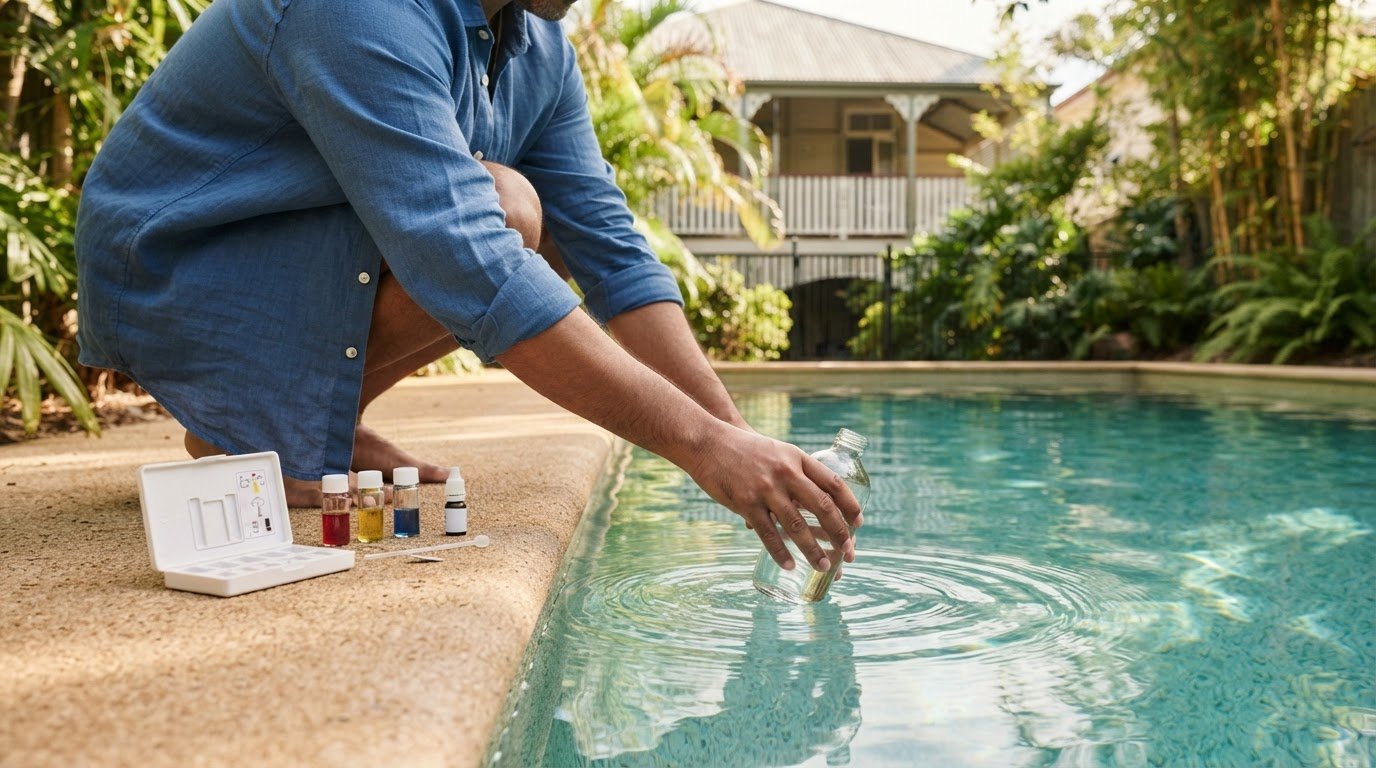
A pool can look clear and still need testing. For pool water testing in Bardon, test weekly in summer and fortnightly in cooler months, checking pH every few days during peak season. Test again after heavy rain or a busy swim, or whenever the water turns cloudy or feels different.
Chlorine is only one part of the picture. Testing several water readings together can help explain dull-looking water, discomfort while swimming or ongoing difficulty balancing the pool.
This guide covers how often to test, how to collect a sample correctly and what chlorine, pH, alkalinity, calcium hardness and stabiliser readings mean. You’ll also learn what to bring for in-store testing and how a professional water test can help make the next steps clearer.
Key Takeaways
- Set a regular testing routine that reflects the season, and retest after heavy rain, heavy swimming or a change in water clarity.
- Collect at least 240 ml from the deep end in a clean container, then have it tested within 30 minutes.
- Read chlorine, pH, alkalinity, calcium hardness and stabiliser together to understand what may be affecting water balance.
- For in-store testing, bring your pool’s capacity or dimensions, filter type and surface type so the results can guide practical next steps.
Recommended testing frequency
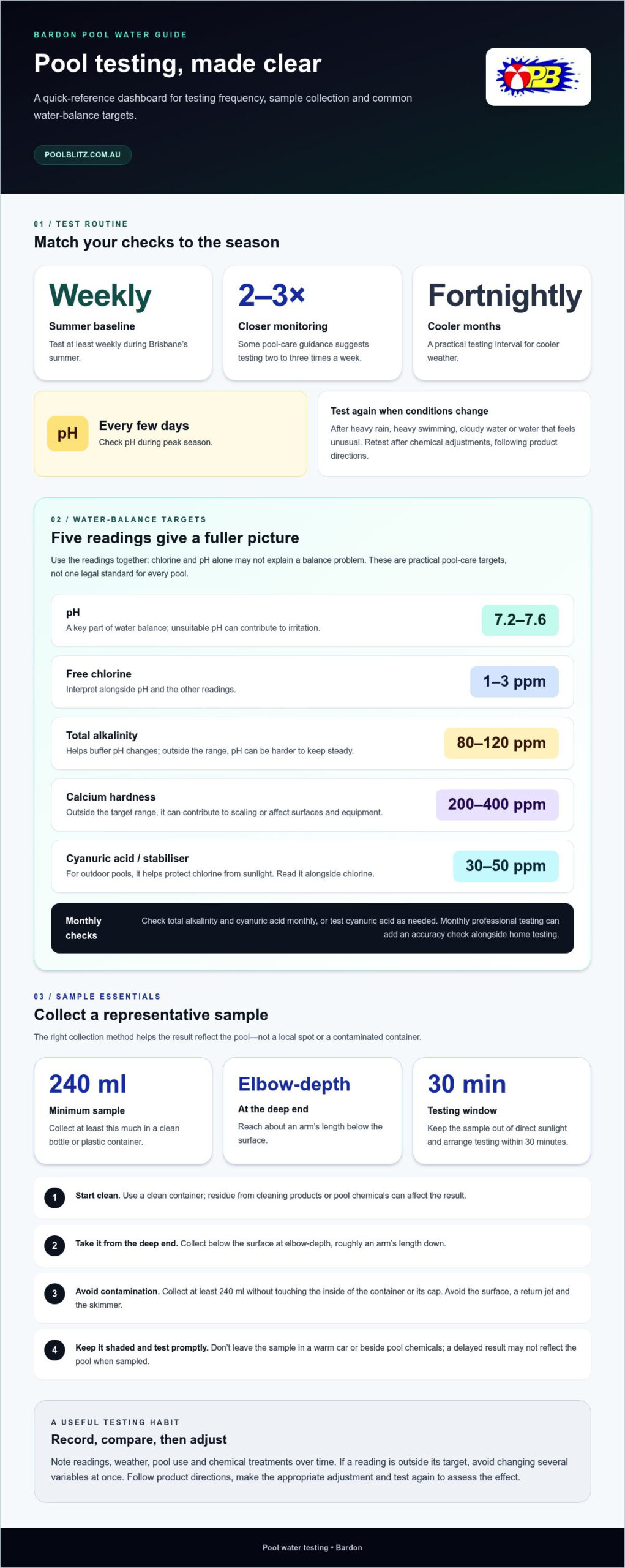
During Brisbane’s summer, test pool water weekly as a baseline. Some Australian pool-care guidance recommends testing two to three times a week to help maintain suitable swimming conditions and care for the pool. These are different suggested routines, so consider how often the pool is used and whether conditions have changed. More frequent checks can reveal an imbalance before it becomes harder to address.
For a residential pool in Brisbane, test at least weekly in summer and fortnightly during cooler months, and check pH every few days during peak season. These intervals are practical maintenance guidance, not a legal testing rule. Water chemistry checks and Queensland pool-safety requirements are separate matters.
Test more often when conditions change. Heavy rain can dilute or alter pool chemistry, and a high bather load introduces more contaminants. Cloudy water or water that feels different is also a reason to test instead of relying on appearance. After adjusting chemicals, follow the product directions and retest to see whether the readings are moving towards the intended balance.
- During summer, test weekly at minimum, or two to three times a week for closer monitoring.
- During cooler months, test fortnightly.
- At peak season, check pH every few days.
- Test after heavy rain or a high bather load.
- Test promptly if the water looks cloudy or feels unusual.
A regular testing routine makes results easier to interpret over time. Compare each reading with previous tests, noting changes in weather, pool use and chemical treatment. Check total alkalinity and cyanuric acid monthly, or test cyanuric acid as needed. Monthly professional testing can add an accuracy check alongside home testing. If readings change sharply or remain difficult to balance, use a full set of results to guide the next adjustment instead of adding chemicals by guesswork.
Water sample size and collection guidance
A representative sample helps produce an accurate reading. Collect at least 240 ml from the deep end, taking water from elbow-depth, about an arm’s length below the surface. Avoid scooping from the top, beside a return jet or near a skimmer, where local conditions may not reflect the pool as a whole.
Yes, you can test pool water at home with a pool test kit. A kit’s usefulness depends on following its instructions carefully, using the correct sample amount and reading results within the stated time; no particular brand is needed for these collection steps.
Follow this order when preparing a sample for testing:
- Use a clean sample bottle or another clean plastic container. Residue from cleaning products or pool chemicals can affect the result.
- At the deep end, reach below the water surface to elbow-depth, roughly an arm’s length down.
- Collect at least 240 ml without touching the inside of the container or its cap.
- Keep the sample out of direct sunlight and arrange testing within 30 minutes of collection.
A morning sample is a practical choice. Keep it shaded and bring it in the same day; don’t leave it in a warm car or beside pool chemicals. Test promptly, because the sample can change after collection and a delayed result may not reflect the pool when you took it.
For home testing, take a fresh sample and follow the kit’s specified method for each chemical reading. Don’t dip a strip into a bottle that has held another liquid, or estimate a colour between chart values without checking the kit instructions. If results are difficult to interpret, expert water balancing support can help turn a complete set of readings into a considered next step.
Alkalinity, calcium hardness and stabiliser testing
For residential pools in Queensland, practical balance targets include pH of 7.2-7.6 and free chlorine of 1-3 ppm. Total alkalinity, calcium hardness and stabiliser readings add context, because chlorine and pH alone don’t show the full water balance. These are recommended pool-care ranges, not a single legal standard for every pool.
Compare your readings with these common targets:
- Total alkalinity: 80-120 ppm. Alkalinity helps buffer pH changes. If it’s outside this range, pH can be harder to keep steady.
- Calcium hardness: 200-400 ppm. This reading indicates the amount of dissolved calcium. Levels outside the target range can contribute to scaling or affect pool surfaces and equipment.
- Cyanuric acid: 30-50 ppm for outdoor pools. This stabiliser helps protect chlorine from sunlight. Test it monthly or as needed, and interpret it alongside the chlorine result.
A typical pool water test checks chlorine, pH, total alkalinity, calcium hardness and stabiliser. Consider the results together: a suitable chlorine reading, for example, won’t explain shifting pH if alkalinity is outside its target. Balanced readings support comfortable swimming, while unsuitable pH or chlorine levels can contribute to irritation.
For more accurate results, use a fresh sample and follow the kit’s directions for each measurement. Record the results, date and any recent chemical adjustments. If a reading is outside its target, avoid changing several variables at once. Make the appropriate adjustment according to product directions, then test again to assess the effect. This step-by-step approach helps pinpoint what needs attention instead of treating every poor result as a chlorine problem.
Track calcium hardness too, because pool surfaces and equipment interact with the water over time. Consider the reading alongside alkalinity and pH before deciding what to adjust. A complete set of results gives a clearer picture than one reading alone.
Water-balance figures are practical care targets, not a single legal standard for every pool.
In-store pool water testing
For pool water testing in Bardon, an in-store test can help clarify your pool’s chemistry. Computerised testing typically assesses chlorine, pH, total alkalinity, calcium hardness and stabiliser. The readings are most useful when considered together with the pool’s condition to work out what to do next.
Bring these details with your water sample so the results can be interpreted in context:
- Pool capacity or dimensions: these help establish the volume of water being treated.
- Filter type: filtration affects how water is circulated and maintained.
- Surface type: pool finishes can matter when considering water balance.
- Recent changes: mention heavy rain, a large group of swimmers, chemical additions or cloudy water.
Consider the results together instead of reacting to one reading. Cloudy water with an unusual chlorine result, for example, may call for a different response than cloudy water with otherwise steady readings. The sample, pool details and visible symptoms help identify a sensible next step. Follow chemical product directions and avoid adding several treatments at once without understanding their purpose.
Professional water testing can help when home-kit readings are difficult to interpret, the water stays cloudy or repeated adjustments haven’t settled the balance. It can also assess readings a basic home test may not cover. If the results suggest a filtration or equipment issue, describe what you’ve noticed rather than assuming every water problem is chemical.
Pool water testing in Bardon is more useful when you bring a timely sample and details about the pool. To discuss interpreting results and balancing your water, explore expert water balancing.
Pool Blitz: Regular Pool Servicing
Pool Blitz provides regular pool servicing to help manage ongoing pool care when testing identifies water-balancing or maintenance needs. It can be a practical option if repeated checks and adjustments are becoming difficult to fit around routine pool upkeep.
For a one-off need, Pool Blitz also offers casual pool servicing. The team provides pool chemicals, pool equipment repairs, and robotic pool cleaner sales and repairs, which can help when the issue involves treatment products or equipment rather than water readings alone. Clear test results make it easier to explain what you’ve noticed and what needs attention.
Contact Pool Blitz to discuss regular or casual pool servicing and support with your pool-care needs.
Make your next pool-care step count
For pool water testing in Bardon, use each result to guide your next action rather than making several changes at once. Keep a simple record of readings and recent treatments, then note how the water responds. This provides a useful reference if the same balance issue returns or the water’s appearance changes.
If interpreting results or keeping up with a consistent care routine is taking more time than you’d like, Pool Blitz offers regular and casual pool servicing. The team also repairs robotic pool cleaners, which may help when cleaning equipment needs attention. Choose the support that suits the task, whether you need ongoing pool care or help with a specific maintenance issue.
Contact Pool Blitz about pool testing and discuss a practical next step for your pool.
Frequently Asked Questions
What does my water test mean?
A water test shows whether measured chemistry is within its recommended range and which readings may need attention. Read the results as a set: pH, for example, helps put a chlorine reading in context. Check the units and test method before comparing readings, then record the date and recent treatments to make changes easier to interpret.
When should you test your pool or spa?
Test pool water routinely, then test again after heavy rain, a busy swim, a top-up or a chemical adjustment. For spas, follow guidance intended for the spa rather than automatically applying pool targets, as water and maintenance requirements differ. If water clarity changes or the surface feels unusual, test before making further adjustments.
Why is water chemistry so important?
Balanced chemistry supports comfortable swimming and effective sanitising, while helping limit conditions that can affect pool surfaces and equipment. Unsuitable pH, for example, can affect how chlorine works, so adjusting chlorine alone may not address the underlying issue. Use test results to guide measured changes instead of adding chemicals by guesswork.
Where can I get pool water tested in Bardon, Brisbane?
Bardon pool owners can turn to Brisbane-based Pool Blitz for expert water balancing using testing equipment. Testing can help make sense of a persistent imbalance or changing water conditions. Bring a fresh sample and details about the pool so readings can be considered alongside its setup and recent maintenance.
Which pool shops near Bardon offer free water testing?
Don’t assume water testing is free, as arrangements vary between businesses. Pool Blitz provides expert water balancing for Brisbane pool owners. When considering a test, focus on whether it covers the readings relevant to your concern and whether you’ll receive clear guidance on interpreting the results.
What water sample should I bring for pool testing?
Bring at least 240 ml of pool water in a clean sample bottle or plastic container. Take it from elbow-depth at the deep end, keep it out of direct sunlight and have it tested within 30 minutes. Avoid containers with detergent or chemical residue, as contamination can affect readings. Include pool dimensions, filter type and surface type for context.
No responses yet