
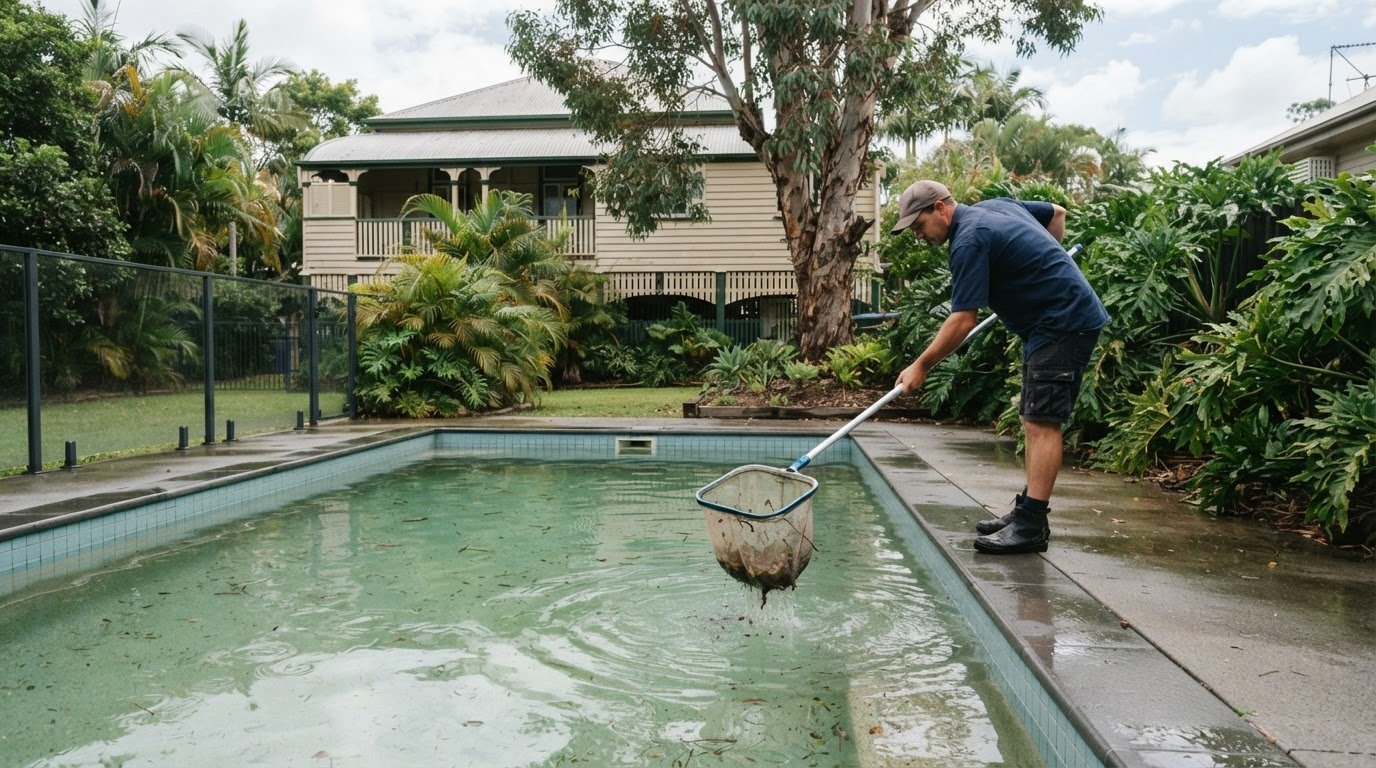
A storm-damaged pool isn’t automatically covered by home insurance: storm and flood cover can be treated differently, and pool equipment may not be covered even if the pool structure is. Storm cleanup for pools in Brisbane starts with documenting the damage and checking your policy before discarding debris or damaged equipment.
After heavy rain and wind, leaves, runoff and diluted water chemistry can throw pool water out of balance and contribute to algae growth. A green or cloudy pool needs careful recovery, not guesswork, and shouldn’t be used for swimming while the water is unclear.
This guide explains what to consider when reviewing insurance, why Brisbane storms can turn pool water green, and what cleanup and follow-up involve. You’ll also learn how to record storm damage, remove debris carefully, and restore water clarity through appropriate testing, treatment and filtration.
Key Takeaways
- Prepare your pool and backyard before Brisbane’s storm season, so essential equipment and outdoor areas are ready when severe weather is forecast.
- Look beyond visible leaves when pool water turns green: circulation, blocked baskets and water balance can all contribute to algae growth.
- Plan for follow-up testing and filtration after treatment; water clarity can take time to return, and the next steps depend on how the pool responds.
- For help with recovery or ongoing care, Pool Blitz offers casual and regular pool servicing, pool chemicals, and robotic pool cleaner repairs.
Brisbane storm season timing and preparation
Brisbane’s storm season runs roughly from October through March. Storm activity is most intense from December through February, so homeowners can prepare before summer weather builds. The Bureau of Meteorology gives Brisbane’s mean January maximum temperature as 30.4°C. Warm conditions, heavy rain and wind can leave leaves in the pool, block the filter and affect water chemistry.
Use September to early October to clear gutters, tidy the pool area and photograph the pool and equipment. Record the condition of the pump, filter and other key systems before storms arrive. Keep those images with your insurance details. Review your policy before storm season, paying attention to the distinction between storm and flood cover and whether pool equipment is included.
When a serious storm is forecast within 24 to 48 hours, secure loose outdoor items and clear leaves from baskets. If chlorine is below 1.5 ppm before a severe storm, the recommended preparation is a slight increase. During ordinary storms, the pump can generally keep running. If lightning is striking close, switch it off at the wall and restart it after the worst has passed.
Does Brisbane City Council or Queensland law have rules for storm-damaged pool fences? Queensland pool barrier legislation applies to pool fencing, gates and latches. After a storm, inspect the barrier for damage and make sure it remains compliant.
Which Brisbane pool cleaning services offer emergency storm cleanup? Services that handle debris removal, filter clearing and water balancing are relevant to post-storm recovery; emergency callouts are a separate service category. To prepare your pool, prioritise a clear filter, working circulation and balanced water before severe weather arrives.
February is Brisbane’s wettest month, with average rainfall of 176.1 mm; summer storms can produce short-duration rainfall exceeding fifty millimetres in an hour, increasing seasonal debris cleanup and pH rebalancing work.
Common causes of green pools, including storm debris
Green water usually signals an algae outbreak, not just a build-up of leaves. Brisbane storms can blow debris and runoff into the pool, while rain dilutes the water chemistry. Together, these changes can weaken sanitising and create conditions for algae to grow. Once it starts, algae can spread within days, so a change in water colour needs prompt attention.
Debris can also affect circulation. Leaves and twigs may clog skimmer baskets or restrict the filter, reducing water movement and creating areas where algae can take hold. Check the pool surface, baskets and filter for blockages, then look for signs that equipment isn’t circulating water properly. If the pump stays off for two to three days during a heatwave and storm sequence, algae may have time to establish.
Other common triggers include low chlorine, poor circulation, unbalanced water and faulty equipment. Several issues can occur at once: storm debris may block a basket while rain alters the chemistry, leaving the pool less able to resist algae. An inspection should therefore assess both the water and equipment, rather than treating the green colour alone.
A green or cloudy pool isn’t suitable for swimming. Low sanitiser can allow bacteria to be present, while poor visibility can hide hazards beneath the surface. Keep swimmers out until the water is clear and properly treated.
Recovery usually involves removing debris, brushing pool surfaces, restoring water balance and maintaining filtration. Chlorine shock treatment is the primary treatment for killing algae and bacteria; algaecide is supplementary and can help prevent regrowth. Most green pools can be treated without draining, but a pool left green for months or years may take longer to recover and may need a drain and acid wash. If an inspection identifies a pump or other equipment fault, pool equipment repairs can address the circulation problem behind recurring algae.
Follow-up visits until the water is clear
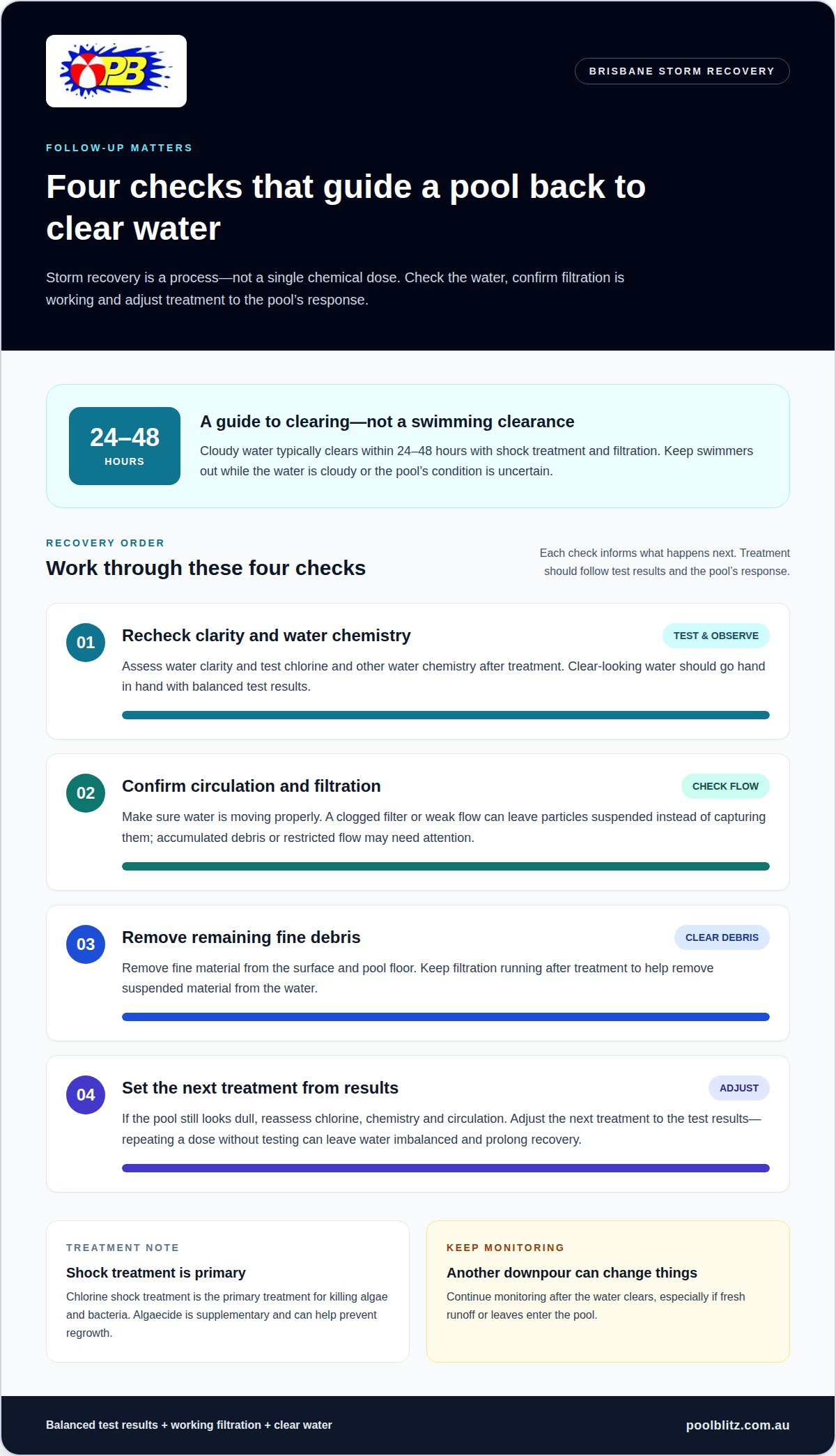
Storm recovery needs more than one visual check. Cloudy pool water in Brisbane typically clears within 24-48 hours with shock treatment and filtration. That timeframe is a guide to the clearing process, not a signal that every pool is ready for swimming. Owners should keep swimmers out while water remains cloudy or the pool’s condition is uncertain.
A follow-up assessment considers how the water and equipment are working together. The technician checks water clarity, tests chlorine and other water chemistry, and confirms that circulation and filtration are operating. If the filter is clogged or flow is weak, particles can remain suspended instead of being captured. Treatment should reflect test results and the pool’s response, rather than simply adding more chemicals.
Filtration must continue after treatment to remove suspended material from the water. The filter may need attention if debris has accumulated or pressure changes indicate restricted flow. If the pool still looks dull after treatment, reassess chlorine, chemistry and circulation. Repeating a chemical dose without testing can leave the water imbalanced and prolong recovery.
For a storm-affected pool, the follow-up process commonly involves:
- Rechecking clarity and water chemistry after treatment.
- Confirming the filter and circulation system are moving water properly.
- Removing remaining fine debris from the surface and pool floor.
- Adjusting the next treatment according to test results.
Clear-looking water is an important visual sign, but it should go hand in hand with balanced test results and functioning filtration. Expert water balancing can help address chemistry changes, while suitable pool filtration systems support water movement and debris removal. Keep monitoring the pool after it clears, especially if another downpour brings fresh runoff or leaves.
After a storm, clear debris from pool baskets and filters, but retain it until your insurer says it can be discarded.
Pre-storm and post-storm homeowner routines
A simple routine helps Queensland pool owners reduce debris, spot damage and guide recovery after heavy rain. Prepare before severe weather, then inspect the water and equipment once conditions are safe.
Removing Storm Debris
Use a leaf net to remove leaves and branches from the pool surface, then clear debris from baskets and the filter. Keep the removed material until your insurer says it can be discarded. This helps preserve information about storm contamination if you need to document a claim. Don’t force large branches through skimmers, as they can obstruct the system.
Cleaning and Rebalancing Pool Water
After heavy rain, take a water sample and test the pool chemistry, including chlorine. Rain can dilute pool chemistry, particularly stabiliser and salt. Adjust the water based on test results, then check clarity before allowing swimming. Green or cloudy water isn’t safe for swimming because low sanitiser may allow bacteria, while poor visibility can hide hazards. Expert water balancing can help restore the water’s balance.
Running the Pool Pump and Filter
After a storm, running the pump and cleaner on full for 12-24 hours can help clear cloudy water. Check that baskets are clear and water is circulating through the filter. During ordinary storms, the pump can generally stay on; if lightning is striking close, switch it off at the wall and restart it after the worst has passed.
Checking Pool and Fence Damage
Inspect the pool, pump and filter for visible damage, unusual operation or reduced circulation. Photograph any damage, note the date and time, and record changes in water level. Check that the safety fence, gates and latches remain intact and comply with Queensland pool barrier legislation. Contact your insurer promptly about damage, and don’t drain the pool to make room for rain.
For help restoring water chemistry after a storm, arrange professional pool water balancing.
Pool Blitz
Pool Blitz helps Brisbane pool owners manage the work that follows storm damage, from water care to equipment concerns. If debris, cloudy water or disrupted circulation has made your pool difficult to maintain, casual pool servicing can support a one-off recovery, while regular servicing helps with ongoing upkeep. Pool chemicals and equipment repairs can also address practical needs as you restore the pool.
The right next step depends on what an inspection reveals. Water that needs attention calls for careful testing and balancing; equipment that isn’t circulating properly may need repair. Robotic pool cleaners and repairs can support ongoing pool maintenance, but they don’t replace water treatment or equipment assessment.
For help deciding what your storm-affected pool needs, contact Pool Blitz.
Make your next pool-care step count
Once the immediate disruption has passed, consider what would make pool care easier through the rest of storm season. Note recurring problems, such as water clouding after rain or circulation struggling when debris builds up. These patterns can help you develop a practical maintenance routine instead of treating each storm as an isolated event.
Effective storm cleanup for pools in Brisbane is about more than restoring a clear appearance. It also means choosing a manageable next step, whether that’s addressing a lingering problem or arranging ongoing support. Consider what your pool needs now and what would help you feel prepared for future weather.
Pool Blitz can help you plan that next step around your pool’s care needs. Share what changed after the storm and contact Pool Blitz to discuss pool cleanup. A thoughtful approach now can make it easier to enjoy a well-cared-for pool as the season continues.
Frequently Asked Questions
Insurance and Storm Damage: Does Your Policy Cover Pool Repairs?
Not automatically: cover depends on your policy’s terms and how the damage occurred. Check whether it distinguishes storm damage from flood or runoff, and whether equipment such as a pump or filter is covered separately from the pool structure. Keep records of damage and repair work, and speak with your insurer before discarding storm debris or arranging repairs that could affect an assessment.
What does storm cleanup for a swimming pool in Brisbane involve?
Storm cleanup for pools in Brisbane typically involves assessing the pool, removing debris, checking circulation and filtration, then testing and rebalancing the water. The work may also reveal equipment issues that need attention before normal maintenance resumes. For a one-off recovery, casual pool servicing can provide practical support; ongoing care can help maintain water quality after the immediate cleanup.
Which Brisbane pool cleaning services offer emergency storm cleanup?
Pool-cleaning services that handle debris removal, filter clearing and water balancing are relevant to storm recovery. Emergency callouts are a separate service category.
No responses yet